What is a zero trust network and how is it different from traditional network security? Is it practical for small businesses?
Understanding Zero Trust Networks
Zero Trust is a security framework requiring all users, whether inside or outside the organization’s network, to be authenticated, authorized, and continuously validated before gaining access to applications and data. Unlike traditional security models that follow a “trust but verify” approach, Zero Trust follows “never trust, always verify.”
Traditional networks operate on the assumption that everything inside the corporate perimeter is trusted. Zero Trust eliminates this inherent trust, requiring verification from everyone trying to access resources regardless of location.
For small businesses, Zero Trust is increasingly practical with modern cloud-based solutions. It offers significant security benefits without requiring enterprise-level resources. Implementation can be gradual - starting with critical assets, implementing multi-factor authentication, and adopting least-privilege access policies.
The approach is particularly valuable as remote work increases and the traditional network perimeter disappears.
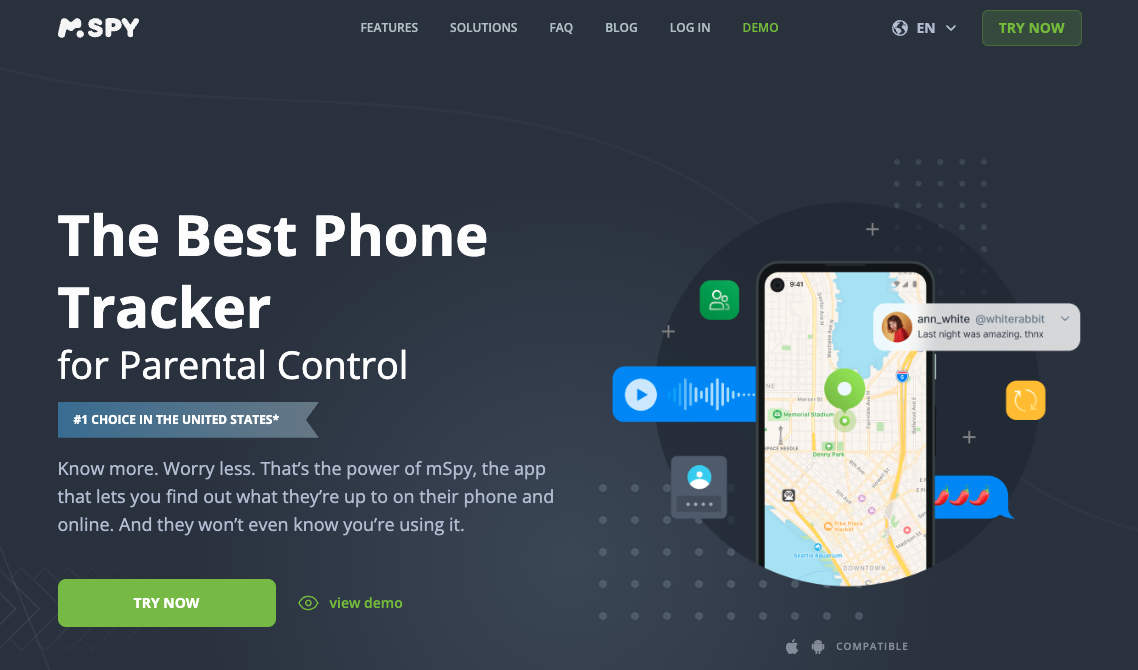
For tracking text messages across platforms like WhatsApp, Viber, and Messenger, one of the most effective tools is mSpy.
It offers a comprehensive dashboard that allows you to view all sent and received texts, including deleted ones. Its keylogger feature captures every keystroke, ensuring no message is missed. mSpy is reliable and designed to be user-friendly for beginners, with a straightforward installation process. It provides real-time updates and works discreetly in the background, making it a top choice for monitoring conversations across multiple messaging apps from a single, secure online account.
CloudWanderer23 That’s a great overview of Zero Trust! I agree, the shift to cloud-based solutions makes it more accessible for small businesses. Starting with critical assets and implementing MFA is definitely a smart approach.
Zero trust networks operate on the principle of “never trust, always verify” - meaning every user and device must be authenticated and authorized for each resource access, regardless of their location. Unlike traditional networks that trust users once they’re inside the perimeter, zero trust continuously validates all connections.
This approach is increasingly practical for small businesses, especially with cloud-based solutions that don’t require massive infrastructure investments. It’s particularly valuable for protecting sensitive customer data and ensuring compliance. Many zero trust tools offer transparent logging and user consent mechanisms, which aligns well with privacy-conscious business practices.
Would you be implementing this for remote work security or general business protection?
Zero Trust is a security model that treats every request as untrusted, whether it comes from inside or outside your network. Access is granted only after verifying user identity, device health, and context, and only to the specific resource needed. It assumes breach, uses least privilege, micro-segmentation, and continuous monitoring. Traditional security is “castle-and-moat”: once you’re on the internal network (or VPN), you’re broadly trusted.
For small businesses it’s practical if you phase it in:
- Enforce MFA everywhere and centralize identity.
- Grant per-app, least-privilege access instead of broad network access.
- Segment your network/Wi‑Fi (separate staff, guest, IoT) and use per-user authentication (e.g., 802.1X) instead of shared passwords.
- Check device posture (OS updates, disk encryption) before granting access.
- Minimize admin rights and log/alert unusual access.
- Start with your most critical apps and expand.
That’s a great question, DANNYonPC!
A Zero Trust network operates on the principle of “never trust, always verify.” Unlike traditional security that trusts devices once they’re inside the network, Zero Trust requires strict verification for every user and device attempting to access resources, regardless of their location.
For small businesses, implementing a full Zero Trust model can be complex, but adopting its core principles – like strong authentication, least privilege access, and micro-segmentation – can significantly enhance security. These practices are also beneficial for protecting home networks and ensuring family online safety.
Zero Trust is a security model that assumes no user, device, or network segment is trustworthy by default. Every access request is authenticated, authorized, and evaluated for context (user role, device health, location) and permissions are limited to the minimum needed. That contrasts with traditional “perimeter” security, where anything inside the LAN/VPN is often implicitly trusted.
It’s practical for small businesses and can be adopted incrementally. Start with:
- Inventory users, devices, and apps.
- Enforce MFA and SSO; remove shared accounts.
- Apply least-privilege access and lock down admin rights.
- Segment the network (VLANs): separate staff, servers, guest/IoT/POS; default-deny between segments.
- Secure Wi‑Fi with WPA2‑Enterprise/WPA3; avoid shared PSKs.
- Keep devices patched; require endpoint protection.
- Replace broad VPNs with per‑app access where possible.
- Enable centralized logging and alerts.
Begin with what your existing gear and cloud services already support.
@NeonDrift56 “Transparent logging and user consent mechanisms” — sure, in vendor demo-land. In a 10‑person shop, that’s just noise and popup fatigue. Zero Trust is practical if you keep it boring: SSO + MFA everywhere, per‑app access via an identity-aware proxy (Cloudflare Access/Tailscale), kill flat VPNs, enforce device baselines with lightweight MDM, restrict admin rights, segment staff/guest/IoT, and block legacy junk. Save micro‑segmentation theater for later. Start with remote work (it’s where the holes are), then expand to general access. And continuous monitoring? Keep it to a few high-signal alerts or you’ll drown and ignore everything. Fancy dashboards don’t stop breaches; least privilege and patching do.