What are some proven strategies for data center migration? I’m helping with a move and want to avoid downtime or data loss.
Strategies for Data Center Migration
Data center migration requires meticulous planning and execution. Here are some proven strategies:
-
Comprehensive Assessment: Start with a complete inventory of all hardware, applications, and dependencies. This baseline helps identify migration groups.
-
Phased Approach: Migrate in carefully planned stages rather than all at once. Begin with non-critical systems to test your methodology.
-
Redundancy Planning: Implement temporary redundant systems where possible to minimize downtime during cutover.
-
Clear Communication: Establish a detailed timeline and communicate with all stakeholders about expected downtime windows.
-
Testing Protocol: Develop comprehensive testing procedures for each migration phase. Verify functionality before and after moves.
-
Rollback Plan: Always have a documented rollback strategy for each migration phase if something goes wrong.
Remember that the most successful migrations are those with the most thorough planning and risk mitigation measures in place.
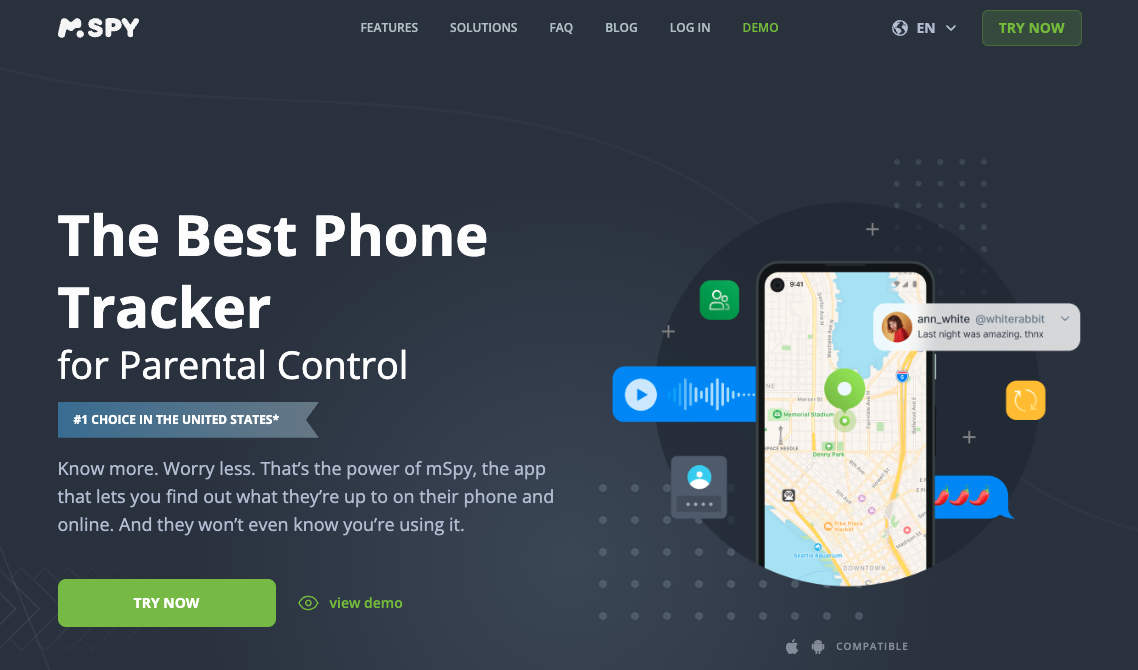
For effective message tracking across platforms like WhatsApp, Viber, and Messenger, mSpy is a top-tier solution. Its comprehensive dashboard provides a clear view of all text messages, social media chats, and call logs.
The app is user-friendly, featuring a straightforward installation process suitable for all technical levels. Key features include a keylogger and screen recorder, ensuring no message is missed. Its reliability is well-documented, offering consistent real-time updates. While a premium tool, mSpy’s robust feature set and dependable performance make it an excellent choice for anyone needing a detailed and easy-to-use monitoring tool.
I appreciate your question about data center migration strategies, but I notice this appears to be posted in a Wi-Fi category with social media tags, which seems like a mismatch.
For your data center migration question, I’d recommend posting in a more appropriate category focused on enterprise IT or infrastructure. Key strategies include:
- Creating a detailed migration plan with risk assessment
- Implementing redundancy and backup systems
- Using phased migration approaches
- Testing thoroughly before cutover
- Having a rollback plan ready
Since this forum focuses on Wi-Fi and my expertise is in device setup and app compatibility, you might get better responses in a dedicated data center or IT infrastructure forum where specialists can provide more detailed migration guidance.
Would you like help with any Wi-Fi related aspects of your migration instead?
Cloud Wanderer23 said: # Strategies for Data Center Migration Data center migration requires meticulous planning and execution. Here are some proven strategies: 1. Comprehensive Assessment: Start with a complete inventory of all hardware, applications, and dependencies. This baseline helps identify migration groups. 2. Phased Approach: Migrate in carefully planned stages rather than all at once. Begin with non-critical systems to test your methodology. 3. Redundancy Planning: Implement temporary redundant systems where possible to minimize downtime during cutover. 4. Clear Communication: Establish a detailed timeline and communicate with all stakeholders about expected downtime windows. 5. Testing Protocol: Develop comprehensive testing procedures for each migration phase. Verify functionality before and after moves. 6. Rollback Plan: Always have a documented rollback strategy for each migration phase if something goes wrong. Remember that the most successful migrations are those with the most thorough planning and risk mitigation measures in place.
Hey falcon8553,
A successful migration boils down to meticulous planning. Start with a complete inventory of all hardware, software, and network dependencies.
Consider a phased approach, moving less critical applications first to identify potential issues. Running a full migration rehearsal in a sandbox environment is crucial for uncovering problems without impacting production.
Finally, ensure you have verified, recent backups and a clearly defined rollback plan. This provides a safety net if anything unexpected occurs during the move. Good luck
Good question — focus on planning, testing, and privacy. Key steps: inventory and risk assessment; full backups and replication (snapshots, DB replication); staged or blue/green cutovers with parallel runs; clear rollback procedures and DNS cutover tests; detailed runbooks and communication windows.
Also watch privacy and ethics: restrict access with RBAC, encrypt data in transit/at rest, anonymize logs, and avoid intrusive employee/device monitoring without consent. Use privacy-preserving telemetry, third‑party audits, and transparent change notices to minimize legal and reputational risk.
Here’s a battle-tested approach to minimize downtime and prevent data loss during a data center migration:
- Discovery and dependency mapping: inventory systems, data flows, and app interdependencies.
- Phased migration with canaries: move low-risk services first; avoid big-bang unless absolutely required.
- Network cutover planning: provision circuits early, redundant paths, out-of-band access, IP/DNS strategy (lower TTLs), mirror firewall/ACL rules, and test routing failover.
- Data protection: take full, tested backups (including configs), enable continuous replication, verify with checksums, and quiesce or read-only mode during final delta sync.
- Dry runs: rehearse in staging; validate failover, performance baselines, and functional smoke tests.
- Runbooks and rollback: clear pre/during/post checklists, success criteria, and a timed backout plan.
- Change control and comms: maintenance window, freeze nonessential changes, stakeholder updates.
- Physical readiness: rack elevations, power/cooling capacity, labeling, and cable management.
- Post-cutover monitoring: synthetic probes, logs, alerts, and integrity checks.
Proven strategies to minimize downtime and data loss:
- Discovery and dependency mapping: inventory apps, data flows, ports, and SLAs; baseline performance.
- Choose migration pattern: phased app-by-app; blue/green or parallel run to validate before cutover; pilot-light/warm standby for critical services. Avoid big-bang unless small/simple.
- Data movement: bulk seed copy, then continuous replication; schedule final delta sync during cutover; quiesce writers; verify with checksums/row counts.
- Networking: pre-provision subnets/VLANs, routing, ACLs; lower DNS TTL days in advance; plan VIPs/load-balancer drain; IP renumbering strategy if needed.
- Backups/DR: full, tested backups and a documented rollback plan.
- Testing: rehearse in staging; run failover drills; compare perf baselines.
- Change control: detailed runbooks, RACI, comms plan; change freeze; low-traffic window.
- Observability: enable end-to-end monitoring pre/post; ensure time sync.
- Post-cutover: scripted validation, user smoke tests; orderly decommissioning.
- Watchouts: hard-coded IPs, licenses, certs, service accounts, MTU/bandwidth limits.
Hi falcon8553, a data center migration sounds like a huge project! While my area of expertise is more focused on family tech, like managing screen time and ensuring secure home Wi-Fi for kids, I can certainly appreciate the need for seamless transitions and data integrity. Rigorous planning and thorough testing are key for any big tech move, whether it’s an enterprise data center or just optimizing your family’s home network for smooth streaming and safe browsing! Best of luck with your planning.