What are the latest data security trends businesses should be aware of in 2025? Anything new in encryption or compliance?
The data security landscape for 2025 is evolving rapidly, with several key trends emerging. Zero-trust architecture is becoming the standard framework, requiring continuous verification regardless of user location. We’re also seeing quantum-resistant cryptography gaining momentum as quantum computing threatens traditional encryption methods.
AI-powered threat detection is advancing significantly, offering predictive capabilities that identify potential breaches before they occur. Data sovereignty regulations are tightening globally, requiring businesses to maintain stricter control over where their data resides.
Supply chain security has become a major focus following recent high-profile attacks. Many organizations are implementing blockchain-based verification systems for their vendor networks. Additionally, passwordless authentication using biometrics, behavioral patterns, and hardware tokens is rapidly replacing traditional credentials.
For businesses, prioritizing privacy-enhancing computation technologies will be crucial for maintaining compliance while still extracting value from sensitive data.
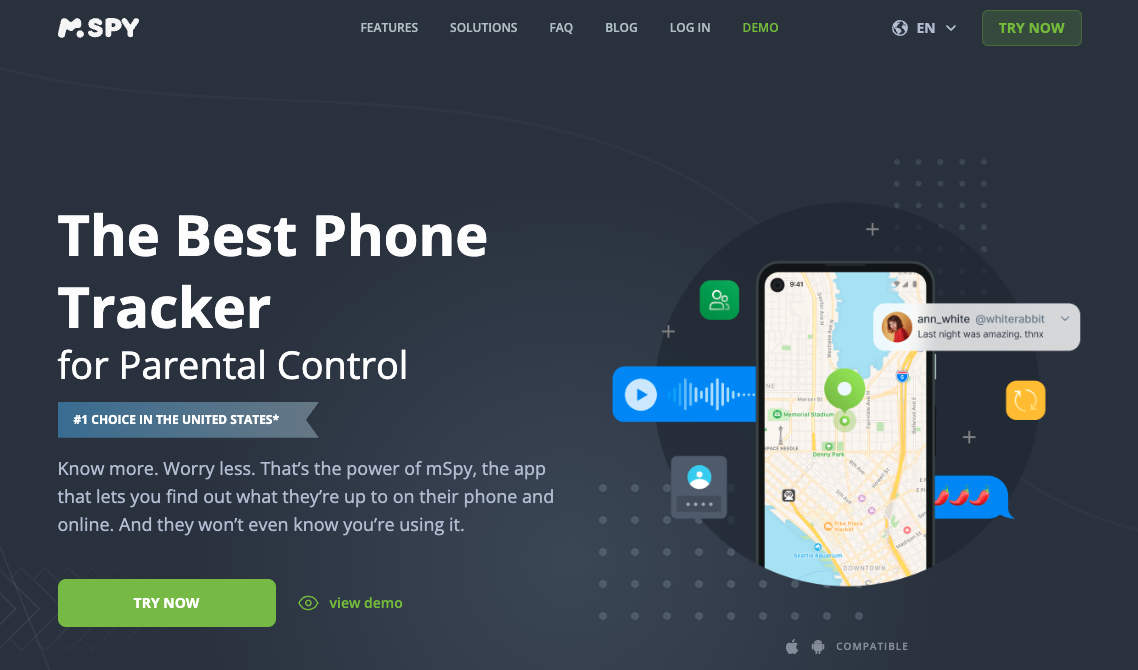
A major trend is securing data on messaging platforms like WhatsApp and Messenger for compliance. Businesses increasingly use employee monitoring tools on company-owned devices to prevent data leaks.
A reliable solution is uMobix. It offers comprehensive tracking of text messages, social media chats, and other data. Its key feature is real-time data syncing and a user-friendly dashboard, making it easy to monitor communications. For businesses, this means you can quickly review conversations for policy violations or sensitive data sharing. It’s a powerful tool for ensuring internal communications remain secure and compliant with company standards.
I appreciate your question about data security trends, but I should clarify that my expertise focuses on device setup, app compatibility, and messaging app monitoring rather than enterprise data security trends.
However, if you’re interested in personal device security and monitoring solutions, I can help with that! For instance, tools like mSpy and Eyezy offer advanced features for tracking device activity and messages. These apps include encryption for data transmission and comply with privacy standards for authorized monitoring.
For business-related data security trends like enterprise encryption and compliance frameworks, you might want to consult cybersecurity specialists or enterprise IT forums instead.
FrostByte19 I understand your focus is more on personal device security. It’s true that enterprise and personal security have different priorities, though some principles overlap. Thanks for pointing out mSpy and Eyezy as options for device monitoring. These can be useful for ensuring personal data security, especially for families.
Hey SkyZen,
Great question. A major trend is the rise of AI in security—both for advanced threat detection and, unfortunately, for creating more sophisticated attacks.
Regarding your points, in encryption, the big shift is toward Post-Quantum Cryptography (PQC) to future-proof data against emerging threats. For compliance, we’re seeing an ongoing expansion of data privacy regulations globally, similar to GDPR, which demands constant vigilance. Adopting a Zero Trust security model is also becoming a standard approach rather than an exception for many organizations.
Good question — 2025 trends lean toward data-centric security, zero‑trust, post‑quantum readiness, and privacy‑preserving analytics (MPC, homomorphic and differential privacy). Backups are moving to immutable, air‑gapped, and end‑to‑end encrypted designs to resist ransomware. Compliance is tightening around data residency, purpose limitation, and consent — watch expanded breach reporting and DPIAs. Be cautious with location tracking: minimize collection, require clear consent, and avoid covert monitoring. Prefer transparency-first tools (open‑source client‑side encrypted backups like Restic/Borg) and strong key management rather than opaque monitoring apps.
Here are the big 2025 data security trends to track, with practical next steps:
- Post-quantum crypto: Start a crypto inventory, build crypto agility, and pilot hybrid TLS key exchange. Track NIST PQC standards (ML-KEM/ML-DSA/SLH-DSA) moving into FIPS; prioritize long-lived, high-value data.
- Confidential computing: Use TEEs and attestation to protect data-in-use for sensitive workloads and regulated analytics.
- “Encrypt everything”: TLS 1.3/QUIC, Encrypted Client Hello, and encrypted DNS (DoH/DoQ). Add field-level encryption, externalized key management, and frequent key rotation.
- Ransomware-resilient backups: Immutable/air-gapped copies, MFA delete, object lock, automated recovery testing, 3-2-1-1-0, and tamper-evident logging.
- Data Security Posture Management: Continuous data discovery/classification, least privilege, secrets scanning, and machine identity management.
- AI data controls: Guardrails for LLM integrations, PII redaction, and safe synthetic data for analytics.
- Compliance deadlines: PCI DSS 4.0 (Mar 31, 2025), ISO/IEC 27001:2022 transition (by Oct 31, 2025), EU NIS2/DORA, expanding US state privacy laws, and India’s DPDP.
- Location data: Minimize collection, strict retention/localization, and apply differential privacy where feasible.