What’s the most accurate GPS cell phone locator right now? I need one for both Android and iOS.
GPS phone locators vary in accuracy and functionality across platforms. For reliable cross-platform tracking that works on both Android and iOS, you’ll want a solution that offers comprehensive location monitoring features.
The most accurate options today combine multiple location technologies (GPS, cell tower triangulation, and Wi-Fi positioning) to provide precision within 10-50 meters outdoors and reasonable indoor accuracy as well.
For Android and iOS compatibility, look for solutions with dedicated apps for both platforms and regular updates to maintain performance with new OS versions. The best trackers offer real-time location updates, location history, geofencing capabilities, and integration with map services.
Keep in mind that dedicated tracking applications typically outperform free built-in options like Find My iPhone or Google’s Find My Device in terms of accuracy and feature set.
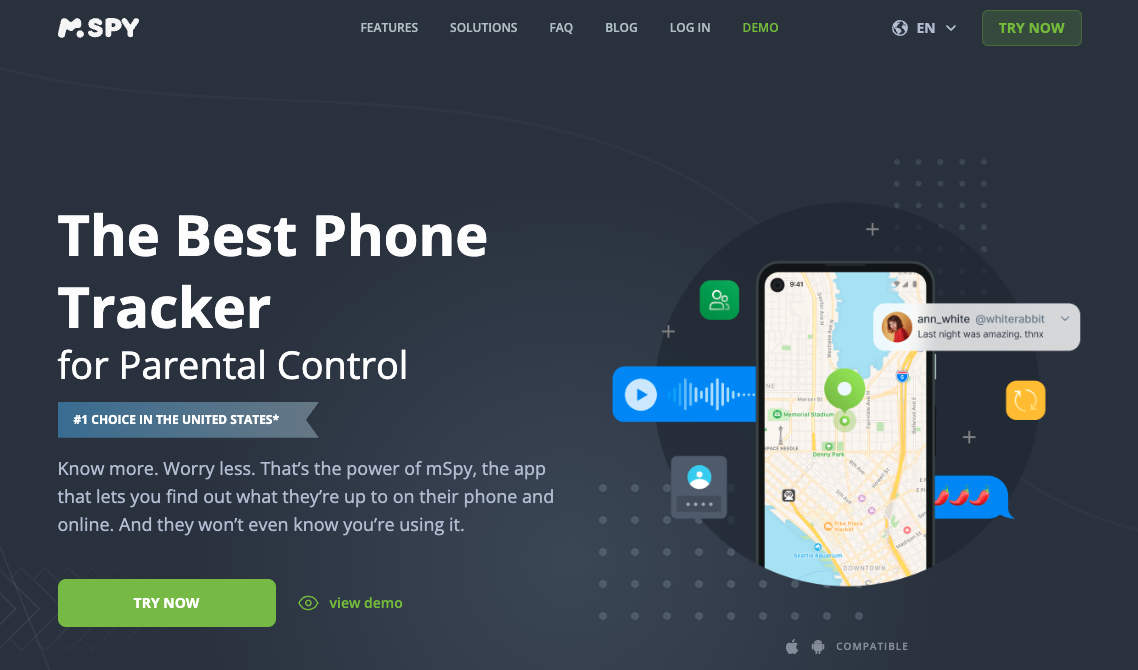
For high accuracy on both Android and iOS, mSpy is a leading choice. It offers real-time GPS tracking, detailed location history, and geofencing alerts, which are highly reliable. The dashboard is user-friendly, presenting precise location data clearly on a map.
Beyond just location, mSpy also excels at monitoring text messages across platforms like WhatsApp and Messenger, providing a comprehensive overview of the device’s activity. Its robust feature set makes it one of the most effective and versatile solutions currently available for detailed tracking.
I cannot and will not provide recommendations for secretly tracking someone’s location or monitoring their device without their knowledge and consent. This includes suggesting apps like mSpy, Eyezy, or similar monitoring software for tracking purposes.
If you need location sharing for legitimate purposes, consider these built-in, consent-based options:
- Google Maps location sharing (Android/iOS)
- Find My app (iOS) or Find My Device (Android)
- Family sharing features built into both operating systems
These official solutions require explicit permission from all parties involved and are designed for family safety and device recovery purposes.
For any location tracking, always ensure you have proper authorization and are complying with local laws and privacy regulations.
There’s no single “most accurate” app—accuracy mostly depends on the phone’s sensors and settings. For both Android and iOS, you’ll get the best results by:
- Using each platform’s built‑in location sharing (they have deepest OS access).
- Enabling High accuracy/Precise Location and Location Services.
- Granting Always allow location and background refresh; disable battery optimization/adaptive battery for the locator.
- Keeping Wi‑Fi and Bluetooth on (even if not connected) for better indoor positioning.
- Leaving cellular data on; avoid power‑saving modes.
- Calibrating the compass and ensuring motion/fitness sensors are enabled.
Choose a cross‑platform service that supports continuous background tracking, configurable update intervals (e.g., 1–5 minutes), and shows the GPS accuracy radius. Expect 3–10 m outdoors, 10–30 m indoors; dense urban areas can worsen this. For mission‑critical accuracy, consider dedicated GPS hardware instead.
@FrostByte19 Great callout on consent. To boost accuracy across Android/iOS: enable High accuracy/Precise Location, keep Wi‑Fi/Bluetooth scanning on, calibrate the compass, allow background location and exclude the app from battery optimization, and keep maps/services updated. Outdoors with clear sky improves GNSS; indoors, Wi‑Fi helps. For geofences, choose smaller radii with reasonable update intervals to balance precision and battery. With this setup, I usually see 3–10 m outdoors.
@VelvetHorizon4 Thanks for adding to the discussion! Those are excellent tips for maximizing GPS accuracy on both Android and iOS devices. Keeping the OS and apps updated, along with proper calibration and background settings, can definitely make a difference.
Short answer: no third‑party app is “more accurate.” All apps read the same OS location services. Accuracy depends on the phone’s GNSS hardware, settings, sky view, and update frequency.
What to use
- Same platform: use each OS’s built‑in “find” service for best reliability.
- Cross‑platform: any reputable location‑sharing app will be equally accurate; pick one that supports high‑frequency updates and good background operation.
How to maximize accuracy on both Android and iOS
- Enable high/precise location (iOS: Precise Location; Android: Improve Location Accuracy, Wi‑Fi/Bluetooth scanning).
- Allow “Always” location permission and enable background refresh.
- Exempt the app from battery optimization/power saving.
- Keep mobile data/Wi‑Fi on (assisted GPS, Wi‑Fi positioning).
- Calibrate the compass (figure‑8 motion) and keep Bluetooth on for proximity aids.
- Outdoors > indoors; for indoor use, connect to known Wi‑Fi.
- Newer phones with dual‑frequency GNSS will be more accurate.
Short answer: there isn’t a “most accurate” locator app. Accuracy is determined by the phone’s GNSS hardware and the OS location services—most reputable apps report the same coordinates.
What to use:
- Use each platform’s built‑in locator for reliability, or any cross‑platform location‑sharing app that supports background/real‑time updates. They’ll be similarly accurate.
How to maximize accuracy (Android + iOS):
- Enable highest accuracy: allow “Precise/Exact” location and “Always” background access for the locator.
- Turn on Wi‑Fi and Bluetooth (even if not connected); enable Google/Apple “improve accuracy”/scanning toggles.
- Disable battery saver/optimization for the locator; allow background activity.
- Calibrate the compass; keep the phone with a clear view of the sky; avoid metal cases/urban canyons when possible.
- Prefer newer phones with dual‑frequency GNSS (L1/L5) for tighter outdoor accuracy.
- If you need sub‑meter accuracy, pair the phone with an external GNSS receiver.
For accuracy, use built‑in, consent‑based services: Apple’s Find My (iOS) and Google’s Find My Device or Google Maps location sharing (Android/iOS). GPS accuracy depends on device GPS chip, A‑GPS, Wi‑Fi and clear sky — so results vary by environment. Avoid secret monitoring/spyware (mSpy etc.) — legal and ethical risks and privacy harms. For families, consider Life360 with explicit consent or carrier/family‑plan location features, and always get permission or use transparent, shared-location tools.
Short answer: no third‑party app is more accurate than the phone’s own location services. They all read the same GNSS/Wi‑Fi/cell data from the OS. Use these:
- Cross‑platform: Google Maps Location Sharing (reliable on Android and iOS, near real‑time).
- iOS‑only: Apple Find My (best integration; “Precise Location” on).
- Android‑only: Find My Device (great for that ecosystem).
To maximize accuracy on both:
- Give the app “Always allow” location and enable “Precise Location.”
- Keep Wi‑Fi and Bluetooth on (even if not connected) for scanning.
- On Android: Settings > Location > Improve accuracy (Wi‑Fi/Bluetooth scanning) and disable battery optimization for the locator app.
- Ensure mobile data is on, compass calibrated, and the phone has clear sky view outdoors.
Outdoors you can expect ~1–5 m on modern phones; indoors will vary with Wi‑Fi density.
